What Is UGC Content and How Marketers Use It to Scale

The AI CMO team
Oct 1, 2026

79% of consumers say user-generated content strongly affects their buying decisions, according to Kapwing's 2026 UGC statistics compilation. That makes UGC more than a collection of customer posts. It's a trust signal, a source of customer language, and a performance asset that can influence what happens between product discovery and purchase.
The important question isn't only “what is UGC content?” It's how marketers distinguish voluntary customer advocacy from paid creator production, place each format where it can reduce buyer friction, measure its contribution to revenue, and govern the rights and disclosures behind every asset.
Table of Contents
- What UGC Content Actually Means in Marketing
- Organic, Incentivized, and Paid Creator Content Compared
- How Big UGC Really Is on the Modern Web
- UGC Formats Marketers Use Every Day
- Why UGC Moves Revenue at the Decision Stage
- Measuring UGC and Keeping It Authentic
- Scaling UGC with The AI CMO as Your Operating System
- Common UGC Pitfalls and Your First 30 Days
What UGC Content Actually Means in Marketing
User-generated content, or UGC, is brand-related content created by real customers, buyers, fans, or independent creators rather than by the brand itself. Common examples include reviews, testimonials, product photos, unboxing videos, product demonstrations, social posts, forum discussions, Q&A answers, and community threads. Shopify's guide to user-generated content provides useful context on why marketers often use the term broadly, even though the source and commercial relationship can differ substantially.
The commercial value becomes clearer when UGC moves from public conversation into a controlled marketing placement. A customer review might remain on a retailer site, or a brand might request permission to feature that review on a product detail page, in an email, or in a retargeting ad. That reuse step turns passive coverage into a performance asset, while the original customer experience remains the reason the content feels credible.
A practical internal definition should answer three questions:
- Who created it? A customer, buyer, fan, employee, independent creator, or contracted creator.
- What does it show? A real experience, opinion, use case, result, objection, or product moment.
- How will the brand use it? As public conversation, owned-site proof, paid creative, lifecycle content, or research input.
Marketers often blur UGC with influencer marketing. The distinction isn't follower count. Organic UGC usually begins with a person sharing an experience without a commissioned content brief, while influencer or creator content usually involves a commercial relationship, a product-seeding arrangement, or defined deliverables. A creator may produce a video that looks like a customer testimonial, but the payment, incentive, usage rights, and disclosure determine how the brand should classify and govern it.
Practical rule: Classify the relationship before judging the content. A natural-looking video can still be paid creator content, and a polished customer review can still be organic UGC.
For teams building a repeatable program, how drives UGC offers additional strategic context on prompting and activating customer content. The working definition should stay simple enough for a content manager, media buyer, legal reviewer, and finance partner to apply consistently.
Organic, Incentivized, and Paid Creator Content Compared
The most common UGC mistake is treating every customer-looking asset as equivalent. The creator relationship changes the level of control, the disclosure obligation, the expected cost, and the trust a buyer may assign to the content.
| Dimension | Organic UGC | Incentivized UGC | Paid Creator Content |
|---|---|---|---|
| Who creates it | A customer, buyer, fan, or community member voluntarily shares an experience | A customer receives a benefit, such as a discount or sample, in exchange for eligible feedback or content | A creator receives payment, products, or another commercial benefit under a brief or agreement |
| Disclosure expectations | No commercial relationship exists, but the brand shouldn't imply endorsement beyond what happened | The incentive should be disclosed clearly and prominently, following applicable advertising rules | The paid partnership or material connection should be disclosed clearly and prominently, following applicable advertising rules |
| Authenticity trade-off | Strongest voluntary signal, but the brand controls neither the opinion nor the timing | Prompted participation can increase volume, but the incentive affects how audiences interpret the content | The format and message can be shaped most closely, but the commercial relationship can reduce perceived independence |
| Cost and control | Usually lower direct cost, with limited control over format, accuracy, and availability | Moderate program cost, with more predictable participation and some guidance | Highest production control and clearer deliverables, with direct creator and usage costs |
An unsolicited review on a retailer site or a Reddit discussion can carry a powerful trust signal because the customer chose to publish it. That freedom also creates risk. The review may mention a limitation, use an unexpected product term, or appear in a context the brand wouldn't select for an ad.
Incentivized content occupies a middle ground. A discount-for-review program or product sample can encourage participation, but the incentive mustn't be hidden. The brand should keep the request focused on honest feedback rather than positive feedback, and it should store the disclosure language alongside the asset.
Commissioned creator content offers the greatest control over lighting, framing, scripts, deadlines, and revisions. It shouldn't be mislabeled as organic UGC. A paid creator can still produce credible material, but the asset belongs in a governed creator-content workflow with documented compensation, rights, approval, and disclosure.
The right question isn't which category is universally superior. It's which source matches the job. Organic content can reveal unprompted objections, incentivized content can fill a review gap, and paid creator content can supply a repeatable creative format for testing.
How Big UGC Really Is on the Modern Web
UGC has become part of the web's operating layer because ordinary users publish continuously across social platforms, video services, review sites, and communities. Independent UGC statistics compiled by Billo describe the historical shift from forums and early reviews to a world where mobile cameras, social publishing, and creator monetization make consumer expression searchable and commercially useful.
The scale is visible in current platform activity. The same compilation reports about 150 million UGC posts on Instagram per day and roughly 600 hours of UGC uploaded to YouTube every minute. Those figures don't mean every post matters to a brand. They show why manual browsing alone can't support a serious program.
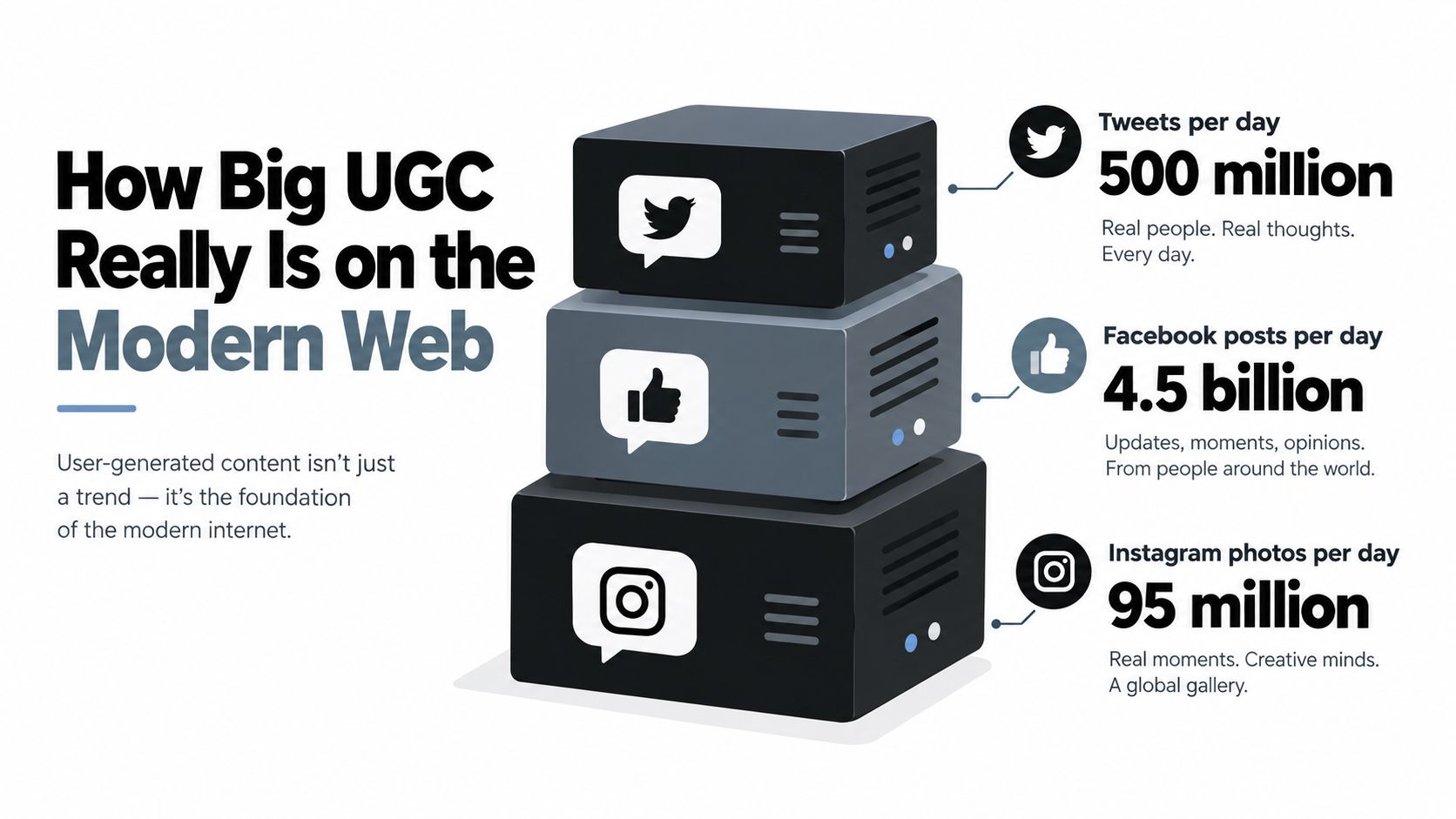
A marketer doesn't need to capture everything. The useful system identifies content connected to a product, customer segment, buying objection, or campaign objective, then routes it through moderation and rights checks. That changes the strategic task from “produce more branded media” to find, qualify, permission, classify, and repurpose relevant customer media.
The commercial infrastructure around UGC is growing too. One 2026 market summary from World Metrics says 39% of brands allocate 15% to 25% of their marketing budget to UGC. A separate market summary cited by Billo estimates the global UGC platform market at $8.48 billion in 2026, with a projection of $64 billion by 2034. The market figure is a projection, not a guarantee, but it signals that sourcing and managing customer content has become a budgeted capability.
That budget should fund a system, not a folder of screenshots. A channel strategy needs clear intake sources, creator or customer classifications, consent records, usage windows, placement rules, and reporting. Without those controls, volume creates review work faster than it creates usable creative.
UGC Formats Marketers Use Every Day
A product page may begin with a star rating, but the buyer often needs more than a score. Each UGC format answers a different question, and the strongest programs assign every format a placement and a job.
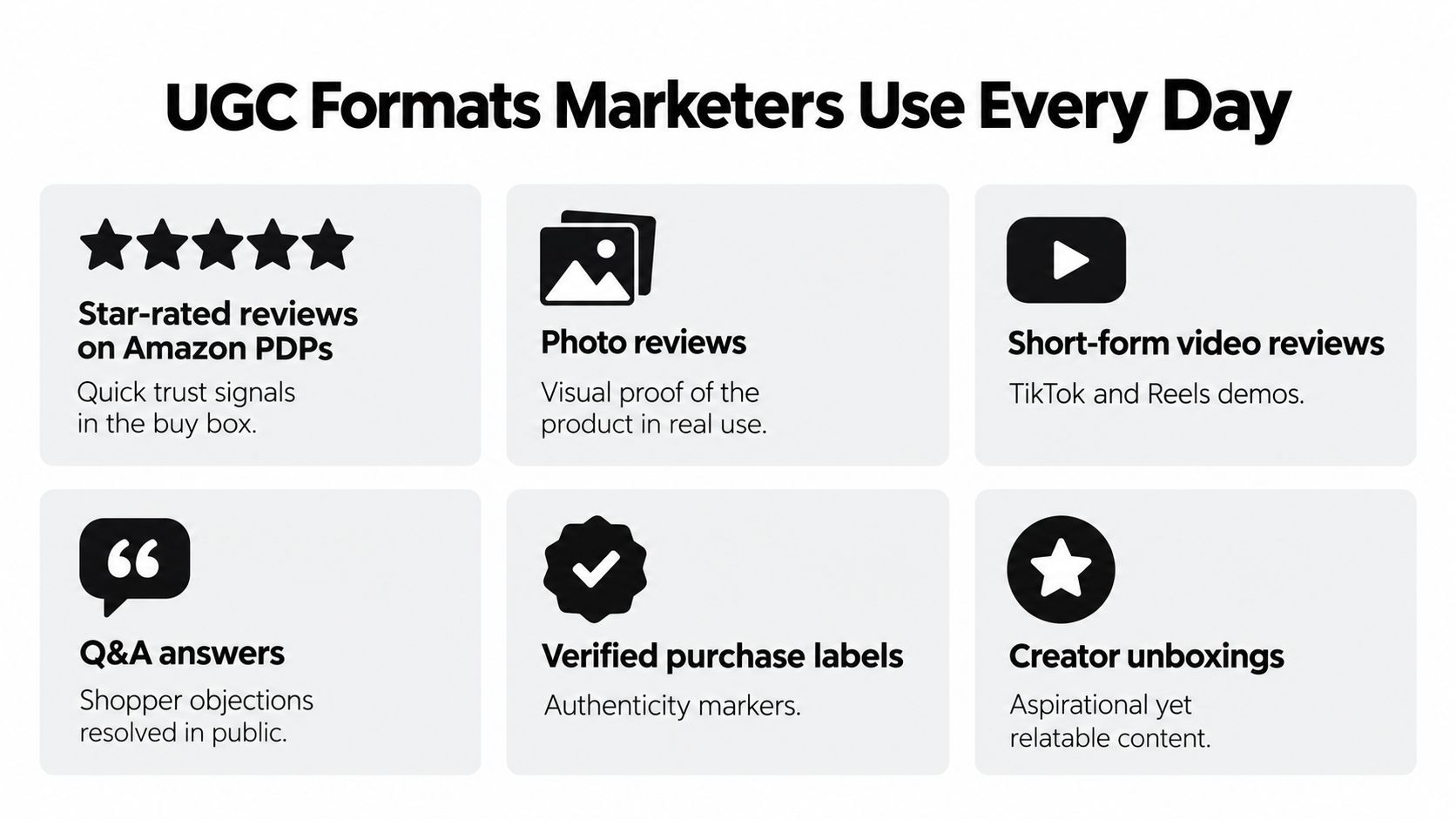
Star-rated reviews work in the buy box because they provide a fast confidence signal. A Glossier product page, for example, might use a review carousel to surface comments about texture, finish, or suitability for a particular routine. The score attracts attention, while the written detail helps the shopper decide whether the product fits.
Photo reviews make the product tangible. A buyer comparing furniture, clothing, cosmetics, or home equipment can see how the item looks outside the brand's studio photography. A photo review is most useful when it includes context, such as lighting, room size, body shape, styling, or product scale.
Q&A threads resolve objections publicly. On a retailer site, one shopper may ask whether a product runs small, while another asks about compatibility or maintenance. Those answers can become an evergreen decision aid, especially when the response comes from a verified buyer or knowledgeable community member.
Short-form video adds demonstration. A Stanley tumbler unboxing Reel can show packaging, size, handling, and first impressions in a native social format. TikTok and Instagram Reels earn attention when the opening moment establishes a clear reason to keep watching, such as a fit test, setup, comparison, or unexpected use.
Longer YouTube haul and review videos support deeper research and long-tail discovery. A viewer may search for a product comparison, setup tutorial, or durability test rather than a brand slogan. Forum threads on Reddit or Quora shape category perception in a different way, because participants often debate trade-offs rather than just display the product.
Podcast callouts extend UGC into audio. A customer story or listener question can introduce a use case that never appears in a product photo. Marketers can plan one customer narrative across several placements, with the creator's permission and the right format adaptation. A detailed review can inform a product page, an email excerpt, a short video script, and a paid-social test without pretending that each placement is the original conversation.
Teams building visual libraries can also explore UGC image tools to support asset production and organization. The important discipline is to preserve the source context, rights status, and disclosure requirements as the content travels.
Why UGC Moves Revenue at the Decision Stage
UGC earns its budget when it reduces uncertainty close to purchase. Awareness content introduces a product, consideration content helps a buyer compare options, and decision-stage content answers the final questions that block the transaction.
A product page is where peer evidence can replace broad brand claims with specific experience. A customer photo shows context. A review describes the result. A Q&A answer handles the concern that the product description overlooked. Backlinko's UGC statistics overview reports that 57% of consumers consider customer ratings, reviews, and UGC the most important product-page element when completing a purchase, while 13% would abandon an online purchase if no UGC is present.
Those figures point to a placement decision, not just a content preference. If a skincare product page has polished brand photography but no customer evidence, the shopper may still wonder whether the texture suits their skin, whether the finish looks natural, or whether the routine is easy to follow.
| Buying Moment | UGC Format Used | Friction It Removes | Primary Metric Moved |
|---|---|---|---|
| Product discovery | Short-form customer video or creator demonstration | “What does this product do in real life?” | Qualified engagement and product-page visits |
| Product evaluation | Written review, photo review, or comparison video | “Will this work for someone like me?” | Product-page engagement and add-to-cart rate |
| Cart review | Q&A answer or usage image | “Will it fit my situation?” | Cart progression and checkout starts |
| Checkout decision | Ratings, verified-purchase content, or concise testimonial | “Can this purchase be trusted?” | Purchase completion |
| Retargeting | Customer story or approved creator asset | “Why should this product return to consideration?” | Assisted conversion and return on ad spend |
Consider a $40 skincare SKU as a decision model, not a promised result. The price creates a clear but qualitative risk: the buyer wants evidence before committing. A review can address performance, a photo can show real-world use, and a short testimonial can demonstrate application or routine fit. Each asset answers a different objection, so the combined effect is greater clarity rather than just more content.
That distinction matters in reporting. A video view can indicate interest, but a product-page interaction, add-to-cart event, assisted conversion, or completed purchase connects the asset to commercial behavior. UGC should earn continued investment by helping buyers progress, not by accumulating attention without a path to revenue.
Measuring UGC and Keeping It Authentic
A scalable UGC program needs two parallel systems. The first proves that the content is genuine enough for the intended use. The second measures whether the placement contributes to a business outcome.
Authenticity validation should begin with the source record. A retailer or ecommerce team can match a review to order data where available, compare email identity with a customer account, and retain platform-native verification labels. A submitted file without provenance shouldn't automatically receive the same classification as a verified purchase review.
Authenticity is a record, not a visual style. A handheld video may look natural, but the team still needs to know who made it, what relationship existed, and what the brand is allowed to do with it.
Revenue attribution needs a hierarchy. On-site teams can compare product-page behavior when UGC is present with behavior in an appropriate control experience. Growth teams can use tagged links and assisted UTM paths for social, email, and retargeting placements. Multi-touch models can then assign a role to UGC that influenced consideration without claiming it created the entire purchase alone.
The weekly scorecard should combine performance with permission status:
- Authenticity check: Source, customer match, platform label, and moderation outcome.
- Distribution: Placement, audience, reach, impressions, and delivery status.
- On-page behavior: Scroll depth, asset interaction, product-page engagement, and add-to-cart activity.
- Commercial contribution: Assisted conversions, attributed revenue, and incremental test results where available.
- Rights status: Consent record, channels approved, usage window, disclosure requirement, and expiration date.
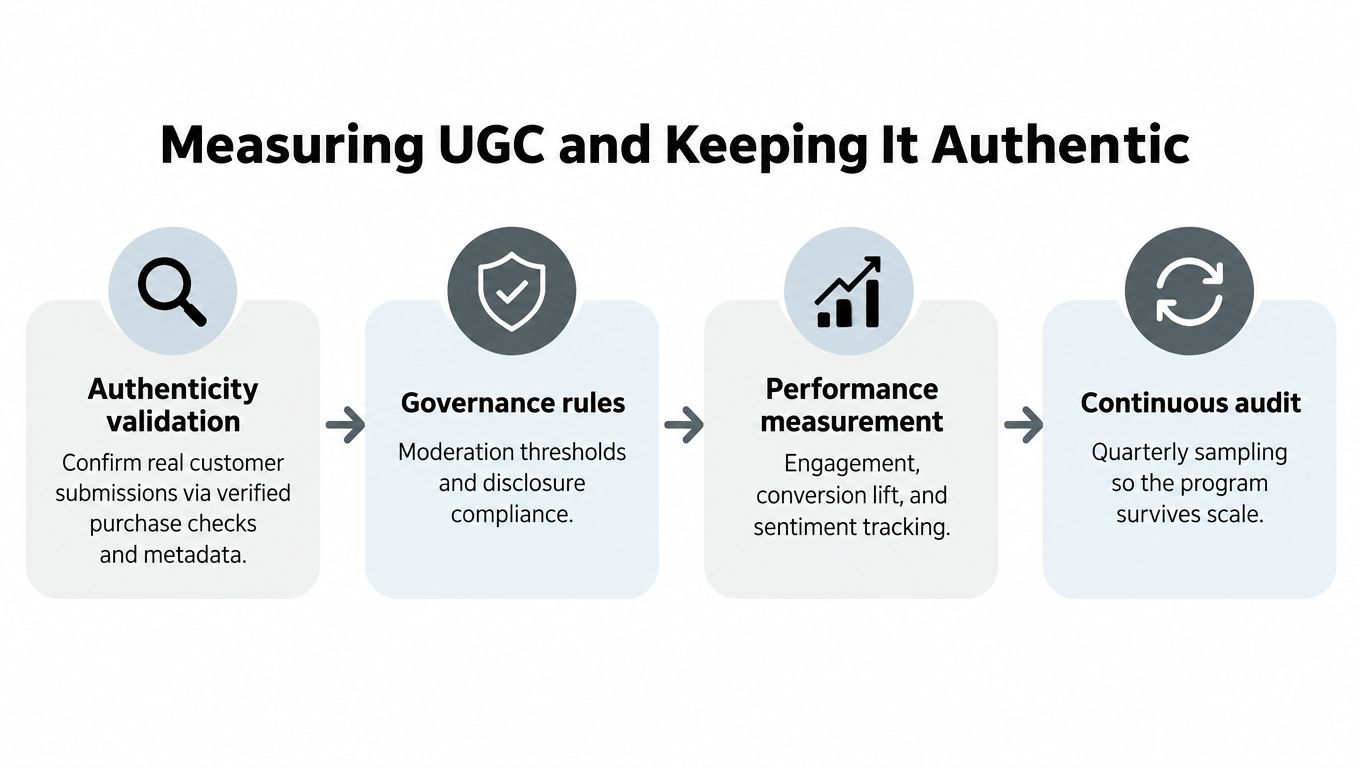
Governance also protects the program from preventable failure. Incentivized posts need clear disclosure. Commissioned creators need contracts that specify media, territory, duration, editing rights, and paid-media use. Brand and legal reviewers need a defined approval path, while the asset library needs one source of truth for the file, creator, consent, rights, version, placement, and result.
Customer feedback can feed both content selection and product improvement. Teams looking to structure that input can use this customer feedback survey resource as a starting point for collecting more useful responses.
Scaling UGC with The AI CMO as Your Operating System
UGC becomes difficult when customer data, creator production, approvals, publishing, and reporting live in separate systems. A marketer may have reviews in one platform, creator contracts in another, paid assets in a shared drive, and revenue data in an analytics tool that can't reliably connect the pieces.
The AI CMO can operate as one option for connecting those workflows. Its customer data platform brings first-party customer records, orders, reviews, and behavioral signals into a shared operating layer. A vetted creator studio can then work from briefs, match creators to brand requirements, and produce UGC-style assets for defined placements.
The process should remain explicit:
- Unify the signal. Connect customer activity and existing content so the team can identify useful segments, product gaps, and recurring objections.
- Brief the production. Define the audience, job to be done, product facts, required disclosure, creative boundaries, and usage rights before a creator starts.
- Route the approval. Store consent, contracts, review decisions, and brand or legal sign-off with the asset rather than in a separate email thread.
- Distribute and measure. Push approved content into paid social, product pages, email, lifecycle journeys, and social feeds, then connect placements to engagement and revenue reporting.
The operating gain comes from preserving context. An audit record can capture consent, usage rights, approvals, distribution decisions, and performance attribution, so brand, legal, and finance teams can review the same evidence. That turns a screenshot folder into a budgeted channel with defined inputs, costs, outputs, and controls.
Teams planning the creative side can also consult the starryai content creation guide for broader social production context. For organizations that want automated execution within set approvals, autonomous AI marketing describes an operating model built around delegated work, controls, and measurable marketing activity.
The practical objective isn't to remove human judgment. It's to reduce manual handoffs, shorten review cycles, and keep brand standards intact as asset volume grows. A repeatable operating layer lets marketers spend more time deciding which customer evidence matters and less time locating the latest approved file.
Common UGC Pitfalls and Your First 30 Days
Many UGC programs fail before the content has a chance to compound. The team collects volume without securing rights, treats paid creator work as organic advocacy, or celebrates views without checking whether the assets help buyers move toward purchase.
Five operating rules prevent most early mistakes:
- Secure rights before distribution: A customer tag isn't permission to place the content in paid advertising, email, or on a product page. Keep the approval and usage scope with the asset.
- Disclose material relationships: Incentives, product exchanges, and payments should be visible to the audience in the relevant placement.
- Diversify the creator pool: Reusing the same small group can narrow the perspectives, use cases, and objections represented in the content.
- Run UGC as a channel: Give it a budget, owner, intake process, approval path, and recurring reporting cadence instead of treating it as a one-off campaign.
- Measure commercial contribution: Views can reveal distribution, but assisted conversions, product-page behavior, and attributed revenue reveal whether the content supports growth.
A practical first month can stay focused:
- Days one through five: Audit existing reviews, tagged posts, videos, community threads, consent records, and expired rights.
- Days six through ten: Define three jobs to be done, such as resolving a product objection, showing real-world use, and supporting retargeting.
- Days eleven through twenty: Recruit ten creators or customer contributors for a clearly scoped test, with disclosure and usage requirements documented before production.
- Days twenty-one through twenty-five: Ship two on-site placements, such as a review carousel and a customer-video module.
- Days twenty-six through twenty-eight: Launch one paid test using approved content and a defined audience.
- Days twenty-nine through thirty: Review assisted conversions, product-page engagement, rights status, and qualitative buyer feedback.
The mindset shift is simple but consequential. UGC isn't decorative proof added after the campaign is finished. It's customer evidence that can be collected, governed, reused, tested, and improved, so every approved asset becomes part of a compounding marketing library rather than a temporary post.
The AI CMO gives marketing teams a single operating layer for customer data, UGC-style production, approvals, distribution, lifecycle journeys, and performance records. Teams can use those connected workflows to turn UGC from scattered social proof into a governed channel with measurable commercial outcomes. Visit The AI CMO to explore how the platform can support a repeatable UGC program.
Share this article